
You need to upgrade your Flash Player

WOMEN’S HAIR LOSS


Female Thinning

Female genetic thinning is recessive and is believed to be inherited from both parents. It is possible for a thinning daughter to have both parents with a full head of hair while her own hair thins, exposing more and more scalp. Often this starts with the hair parting becoming more noticeably thinner, then slowly the hair thins all over the scalp.
Genetic thinning will never lead to baldness in women, but if not treated early, the thinning can make a person very self conscious. Overall, genetic thinning is increasing and is now occurring at an earlier age in both women and men. Thirty percent of women will experience thinning hair before they reach 30. But over 50% will notice genetic thinning after menopause. This compares with 50% of men going bald by the age of 50.
Usually female sex hormonal levels decrease at menopause or after a hysterectomy due to the lowered oestrogen levels allowing male hormones to become more dominant. In some woman thinning hair starts or worsens after taking an oral contraceptive.
Female hormones can be taken to counteract the androgens that affect hair growth. Birth control pills like Dianne 35® have a high oestrogen level, which counter excessive testosterone. Long and short term side effects should be noted, particularly weight gain. These measures will not bring hair back, but they may stop or slow the process.
External or topical testosterone blockers for men and women can reduce the rate of loss by up to 90%. Testosterone blockers containing Finesteride cannot be taken by females of child bearing age and can affect male libido. Recent tests in the UK on post menapausal women found Propecia® to have a negative result compared to the placebo.
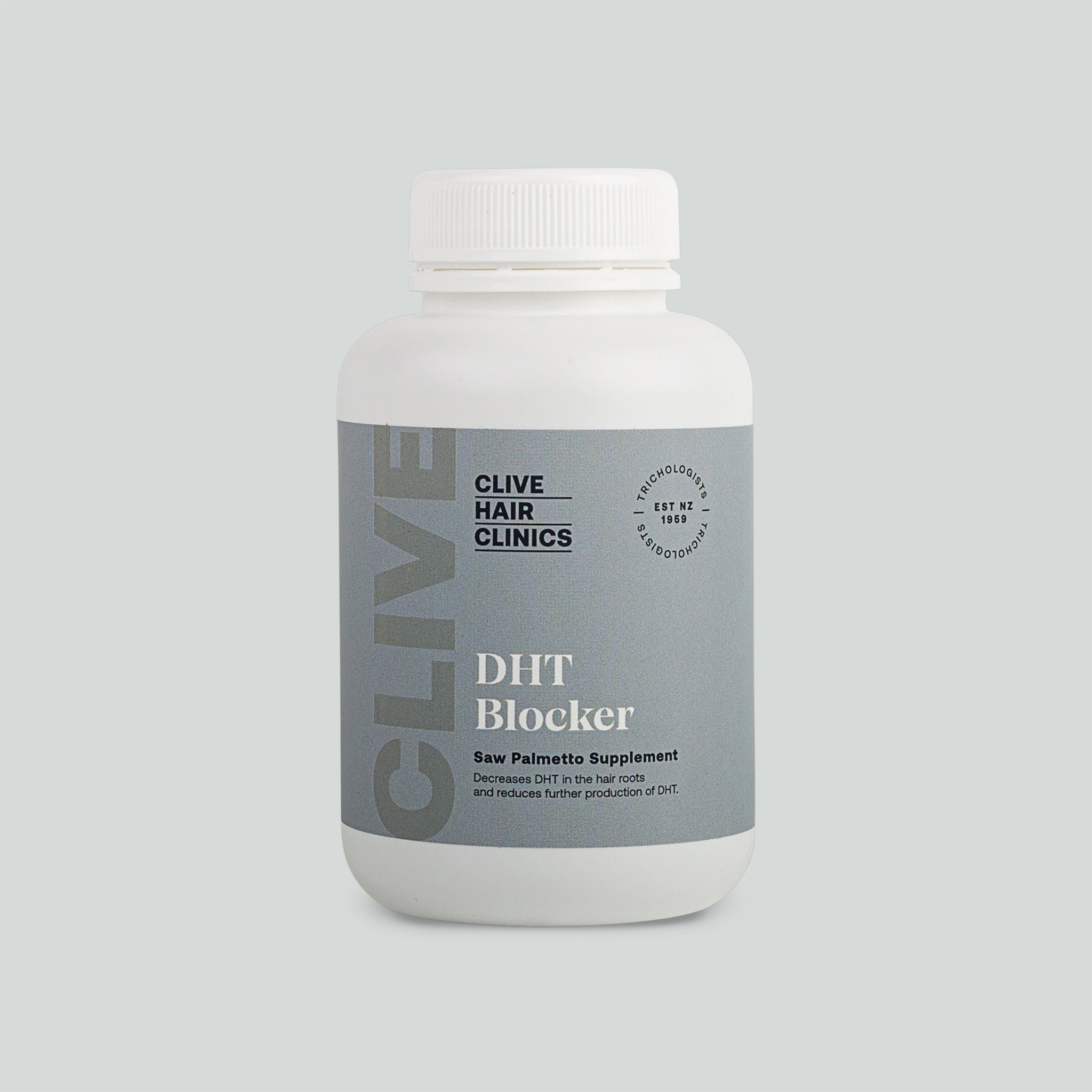
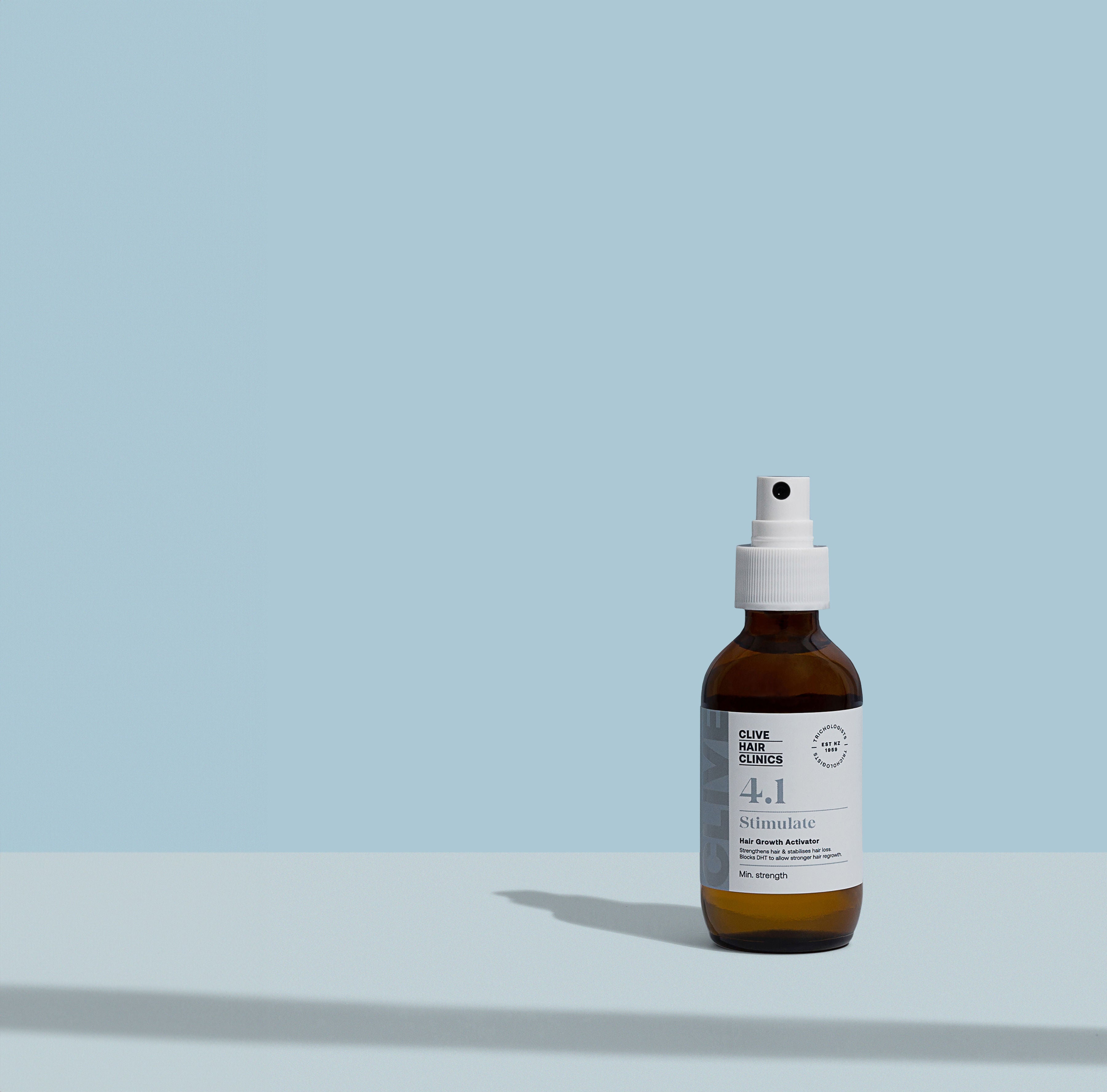
Hormones and blockers are effective only while you are taking them. Clive Clinics have natural testosterone blockers like Saw Palmeto, although less powerful, they can be taken or applied by females and have no detrimental side effects for either sex. Natural topical blockers used by Clive Clinics include Vitamin B6, Zinc and Azelaic Acid. These were found to block up to 95% of the baldness triggering messenger di hydro testosterone. Published in the British Journal of Dermatology (1988), 119, 627 – 632.

Excessive/Diffuse Hair Loss in Men & Women

Most people with diffuse hair loss fear baldness, but although the hair thins, it is normally replaced. If your rate of hair loss increases suddenly the cause would have occurred about three months beforehand. For example, the birth of your baby in April could cause hair loss in July. Having a fever in May could cause hair loss in August. In most cases, the loss will correct itself shortly after the cause of the problem is rectified.
Diffuse hair loss of more than four months may indicate you have a medical or nutritional problem. Three common medical causes of diffuse hair loss include anaemia, thyroid imbalance and sugar imbalances such as hypoglycemia (low blood sugar) or diabetes (high blood sugar). A hair mineral analysis can often give clues to internal disorders or an unbalanced diet that may be the cause of your hair loss.

Some examples of temporary self-correcting diffuse loss are:
* Crash Dieting
This often leads to temporary diffuse hair loss. The main point is not which diet is followed, but how quickly the weight is lost. Rapid weight loss invariably leads to temporary hair loss as your body’s nutrients disregard non-essential cells like hair roots. After a two to four month resting period, the hair falls out, long after the ‘fad’ diet is forgotten.
* Shampooing
Shampooing with normal/quality products will not affect the number of hairs falling out or cause baldness. But if you shampoo less often (because you think a lot of hair comes out when you do), then ironically, you will have amassed more hairs due to fall and it will look like a tremendous loss of hair. The best answer may be to wash it more often. This will also keep the scalp cleaner and decrease scalp oils, perspiration and any hormones that could affect the hair.
* Hairdressing Services
Perming, tinting or bleaching the hair may break or split hairs if incorrectly applied, but will not cause loss unless they burn or irritate your scalp. Some patients believe short cut hair reduces the rate of hair loss – it does not. Neither will shaving the head make any difference. You will just see less hair falling out.

Alopecia Areata (Patchy Baldness)

The third common type of hair loss that can affect women, men and children is Alopecia Areata (hair loss in circular patches). This is considered to be an Autonomic Nervous System disorder and can be triggered by many varied factors but is usually associated with stress.
The disorder often runs in families and may be an inherited inability to uplift specific amino acids from the diet when under stress.
Most commonly a few patches (approximately 4cm diameter) of baldness rapidly occur, sometimes overlapping, sometimes in completely different areas.
It is more common in dark haired people, but is equally distributed in all races, affecting children and younger people more severely. There is no related illness and seldom any other noticeable signs or symptoms, although some clients notice a slight itching in a patch that is just starting to lose hair. Often there is a ‘portwine stain’ noticed just inside the hair line at the nape of the neck. Steroids both externally applied and/or injected into the patches will sometimes release hair growth, but the hair often falls out again when the therapy is discontinued. It is felt the steroids may take over from white corpuscles that are attacking the hair roots on (misguided) instructions from the defence mechanisms involved in the Autonomic Nervous System.
Therapy including the missing Amino Acid L. Tyrosine along with stimulation is often successful. The positive aspect of this problem is the hair normally fully recovers once the stress is overcome.